
Lasers have the ability to close small capillary veins and destroy cherry angiomas (which are dense dome shaped collections of capillaries).
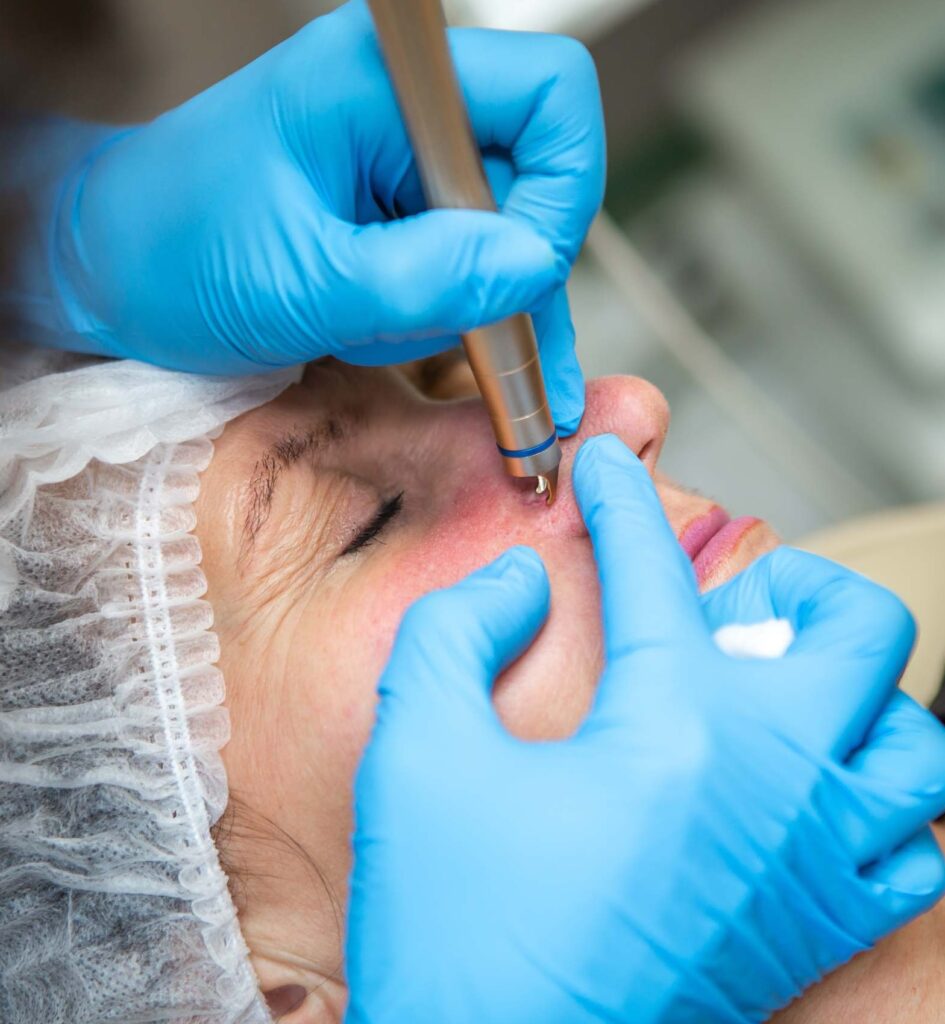
Lasers have the ability to close small capillary veins and destroy cherry angiomas (which are dense dome shaped collections of capillaries).
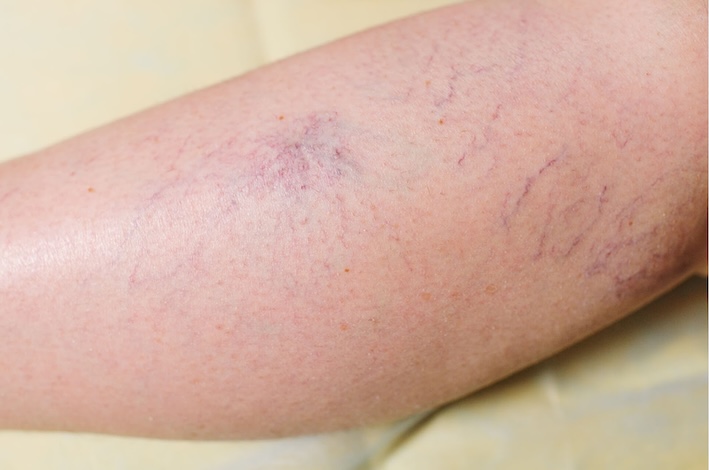
Visible capillary veins, often called spider veins, are small, dilated blood vessels that appear close to the surface of the skin. They form when capillaries weaken or expand due to increased pressure or loss of elasticity in the vessel walls.
Common contributing factors include genetics, aging, sun exposure, hormonal changes, pregnancy, prolonged standing, and skin trauma. These veins are most commonly seen on the face—especially around the nose and cheeks—and on the legs, where gravity places more pressure on the veins.
Visible capillary veins are generally not dangerous and are considered a cosmetic concern rather than a medical problem; however, when they occur on the legs and are accompanied by symptoms such as pain, swelling, or heaviness, they may indicate an underlying vein issue and should be evaluated.
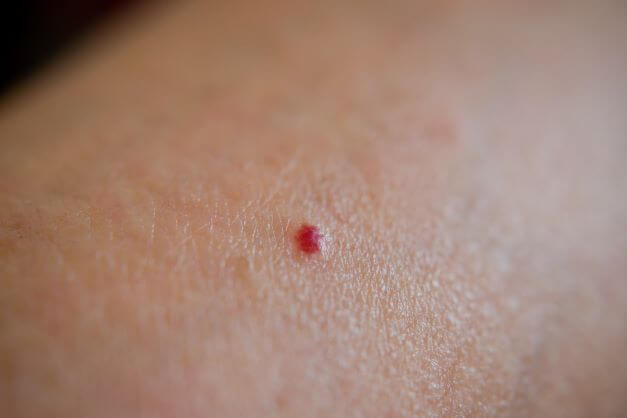
A cherry angioma is a common, benign skin growth that appears as a small red, cherry-colored or purplish spot on the skin. It forms when tiny blood vessels (capillaries) grow abnormally close together, creating a visible cluster under the surface of the skin. They become more common after the age of 30.
Cherry angiomas most frequently appear on the trunk of the body, such as the chest, abdomen, and back, but they can also be found on the arms and shoulders.
They are not dangerous, are not cancerous, and do not pose any health risk; however, they may bleed if scratched or traumatized. Treatment is not medically necessary and is usually only pursued for cosmetic reasons.
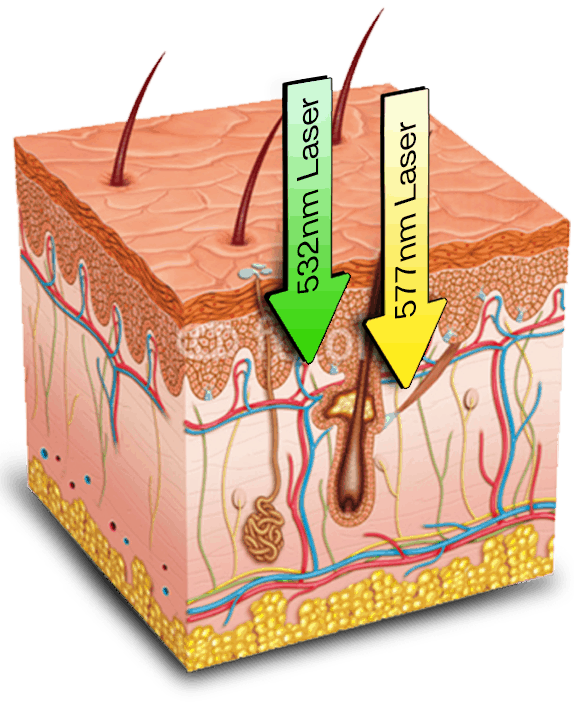
Selective photothermolysis is the principle that allows lasers to safely treat cherry angiomas and spider veins by targeting unwanted blood vessels with heat generated by light. The laser emits a wavelength absorbed by red blood (hemoglobin) while passing harmlessly through the surrounding skin. When this light reaches a spider vein or a cherry angioma, it is absorbed and converted into heat, causing the blood to coagulate and the vessel to collapse and seal shut. Over time, the body naturally reabsorbs the treated vessels, leading to visible clearing.
The treatment is considered “selective” because the laser delivers energy in extremely short pulses, destroying the targeted vessel before heat can spread to nearby healthy skin. By carefully matching the wavelength, pulse duration, and energy to the vessel size, the laser treats these vascular lesions from the inside out without breaking the skin, making the procedure both safe and effective.
Yes. When performed by trained professionals, laser treatment is very safe. The precise timing and energy of the laser protect healthy skin while effectively treating the targeted vessels.
Most patients describe the sensation as a quick snap or warmth, similar to a rubber band flick. Any discomfort is brief, and cooling techniques are often used to improve comfort during treatment.
Results vary depending on the type and size of the treated vessels. Cherry angiomas may shrink and fade within a few days to weeks.
Spider veins often take several weeks for the body to fully reabsorb the treated vessels, however visible improvement cab be observers almost immediately.
Many cherry angiomas respond in one session, while spider veins may require multiple treatments for optimal results.
Treated veins and angiomas are permanently destroyed, but new spider veins or angiomas may appear over time due to aging, genetics, or other factors. Periodic maintenance treatments can help keep your skin looking clear.
Price per treatment: $50 (for up to 10 spots)
Small area: $75
Medium area: $150
Large area: $250