Stretch Mark Camouflage

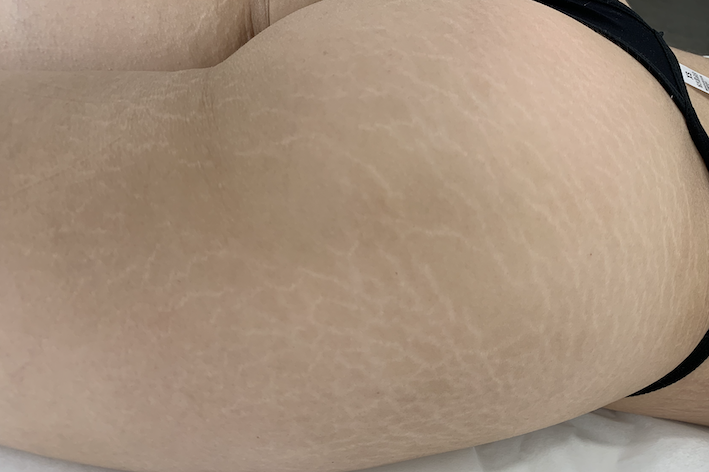
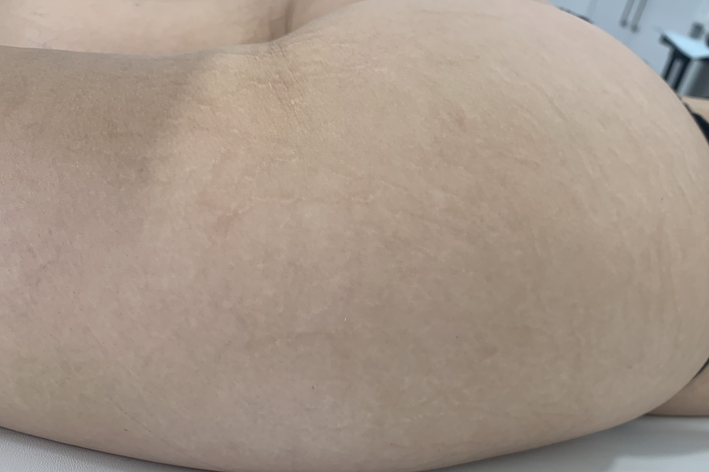
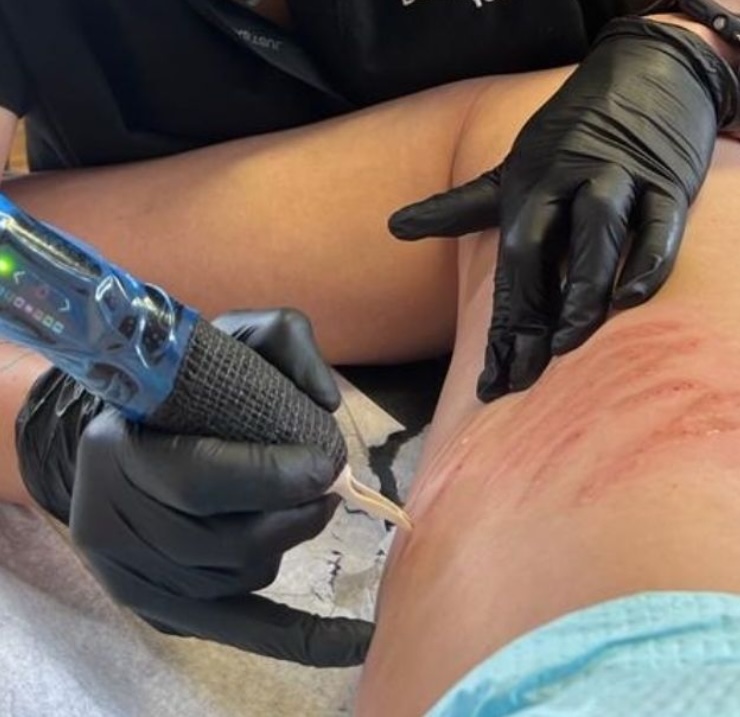
Stretch mark camouflage is a paramedical tattooing technique that uses skin‑tone pigments to blend stretch marks with the surrounding skin, making them less noticeable. The pigments are implanted into the upper dermis to match natural skin color, compensating for the lighter or discolored appearance of mature stretch marks.

Science behind stretch marks

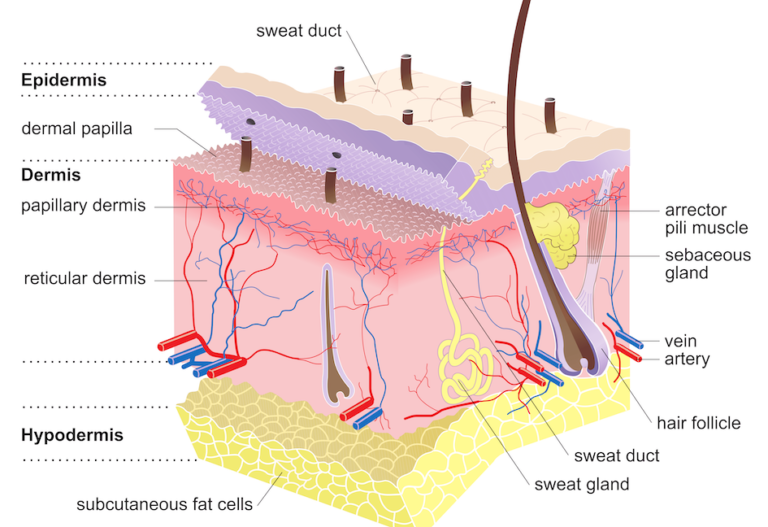
Stretch marks, also known as striae distensae, are common skin changes that appear as long, narrow streaks or lines on the skin. They are technically a form of scarring that occurs in the dermis, the middle layer of the skin, which provides strength and elasticity. While the outer layer of skin (the epidermis) may remain intact, the underlying dermis is stretched or damaged, resulting in visible marks that can vary in color from pink or red in new stretch marks to white or silver in mature ones. Stretch marks can appear on many areas of the body, including the abdomen, thighs, hips, breasts, arms, and lower back.

How Do Stretch Marks Form?

Stretch marks develop when the skin is subjected to rapid stretching or tension that exceeds its natural elasticity. This can happen during pregnancy, puberty, rapid weight gain, or even intense muscle growth. Under such stress, the collagen and elastin fibers in the dermis—the proteins that give skin its structure and flexibility—can break. This microscopic tearing triggers the body’s healing response, but the resulting scar tissue is less flexible and slightly thinner than normal skin.

Hormonal factors also play a crucial role. Elevated levels of cortisol, a hormone released during stress or pregnancy, can weaken the dermal structure by reducing collagen and elastin production. Similarly, hormonal changes during puberty or pregnancy affect skin elasticity, making certain individuals more prone to developing stretch marks. Genetics further influence susceptibility: some people naturally have weaker connective tissue, making their skin more likely to tear under stress.

The Anatomy of Skin

Understanding stretch marks requires knowing the layers of skin and their roles:

  • Epidermis: The outer layer that acts as a protective barrier. It remains largely intact in stretch marks.

  • Dermis: The middle layer containing collagen and elastin fibers, fibroblasts, and extracellular matrix components. This layer provides strength, elasticity, and structural support. Stretch marks occur here when these fibers are stretched beyond their limits and tear.

  • Hypodermis: The fatty layer beneath the dermis, which usually remains unaffected, though underlying fat can influence the appearance of stretch marks.


How does stretch mark camouflage help

There are two primary methods for stretch mark camouflage tattooing:

Method 1: Ink camouflage

a non-invasive paramedical tattooing technique that uses skin-toned pigments to cover and conceal the appearance of stretch marks or scars by filling in the areas missing colour. The procedure requires little to no downtime; however, it takes on average 45-60 days for the skin to properly heal and reveal the final results.

Method 2: Inkless revision

a cosmetic procedure that works by creating tiny wounds in the skin. We create a customized serum that is then further absorbed into the skin through the micro-wounds. Essentially, the needling and the serums together act to stimulate the skin’s natural healing process, creating more effective results than serum alone. The needling causes collagen and elastin to rebuild, which helps to smooth and flatten wider and deeper stretch marks, making them less noticeable.

Treatment results

Before
After
5/5

I wanted to share my experience as a Sarvi customer, her approach and service is superb ! I also wanted to say that she have an extensive knowledge and a great artist at camouflaging stretch marks

5/5

I'm so happy with the stretch mark camouflage treatment I got! It's like magic! Sarvi is amazing at what she does, and she made me feel super comfortable. Now I feel confident showing off my skin.

5/5

Well experienced and trustworthy lady who takes pride in her work. I have taken a couple of treatments from her and honestly I got my self confidence back. I would definitely recommend her.

Price Guide

First session

$500 for the first session

Subsequent sessions

$250 per hour

Got questions?

Here are some answers

How long does the result of this procedure last?

Both ink and inkless camouflage methods provide long-lasting results. Daily use of moisturizer, good diet, general health, and use of sunscreen will help lengthen the effect of camouflage to several years.

How long does it take to see camouflage results?

It totally depends on your body’s natural healing process. Some people will see the results in around 30 days and others need a bit more time, seeing results in around 90 days. If you’re prone to hyperpigmentation (you naturally scar darker), you will most likely take longer to heal.

What to expect after the procedure?

After the procedure, you may experience some mild irritation, redness and swelling, which can last up to one week. During the third week, the treated area will get slightly darker which means that the skin is healing. After that you will begin to see the result of your treatment. We advise you to book a follow up consultation after 45 days of your treatment as we may need to do some minor touch up.

How many camouflage sessions are needed?

Everyone is different and all scars react differently. Therefore, it’s very difficult to predict how many sessions are needed to reach the results you’re after. Some clients are fully satisfied after just one treatment, while other scars may require 3 or more sessions.

By booking a free consultation, we’ll be able to look at your individual skin and scarring and give you a better idea of what results are realistic.

What kind of stretch marks are not eligible for inkiness revision?

Keloid scars cannot be treated with inkless stretch mark revision. If you are prone to keloid scarring, it’s a good idea to discuss this treatment with your healthcare practitioner before proceeding.

If you are prone to hyperpigmentation or post-inflammatory pigmentation, you should book a patch test before booking a full treatment to see how your skin reacts. However, this treatment is a great solution for all other types of scars, including, stretch marks, surgery scars, self-harm scars, acne scars, injury scars, and more. Just like with scar camouflage, we recommend only treating scars that are two years old or more, so they are fully healed at the time of the procedure.

Is scar camouflage suitable for all skin types?

Scar camouflage and other paramedical tattoo services work for most skin types. However, if you are experiencing hyperpigmentation or are prone to developing keloid scars, you should not try this procedure.

Book your virtual consultation today to find out if you’re a good candidate for this procedure!

Can I get ink camouflage if I am tanned?

If you plan on doing ink camouflage, and you are tanned, you need to wait until your skin gets back to its natural color so we can find the pigments that match your natural skin tone.

If you want to get a tan after your treatment, you need to wait until the treated area is fully healed otherwise the sun will manipulate the result you are expecting. It is also recommended to use sunscreen on the treated area prior to sun exposure to maintain better lasting result.

What happens when I tan after ink camouflage treatment?

The color of your camouflaged stretch marks or scars will not change when you tan; only your skin’s overtone will darken. So, your camouflaged stretch marks will become slightly visible due to a mismatch in colors until your tan goes away.

What kind of stretch marks are not eligible for ink camouflage?

Pink, red, or black stretch marks cannot be treated. Stretch marks must be white or lighter than the surrounding skin to be suitable for scar camouflage treatment.

The scars or stretch marks should be at least two years old to be effectively treated. When the skin stretches or shrinks so fast, it causes collagen and elastin to break. Stretch marks that are newly formed are the body’s natural healing process in response to such changes. By waiting two years before getting paramedical tattoo services, you’re allowing your skin to heal and the stretch marks to reach their final stage of healing.

Can I get inkless camouflage if I am tanned?

You don’t need to wait because we are not using ink and we are not trying to match pigments to your natural skin tone so there is no limitation.

If you want to get a tan after your treatment, you need to wait until the treated area is fully healed otherwise the sun will manipulate the result you are expecting. It is also recommended to use sunscreen on the treated area prior to sun exposure to maintain better lasting result.

What kind of stretch marks are not eligible for inkless treatment?

Keloid scars cannot be treated with inkless stretch mark revision. If you are prone to keloid scarring, it’s a good idea to discuss this treatment with your healthcare practitioner before proceeding.

If you are prone to hyperpigmentation or post-inflammatory pigmentation, you should book a patch test before booking a full treatment to see how your skin reacts. However, this treatment is a great solution for all other types of scars, including, stretch marks, surgery scars, self-harm scars, acne scars, injury scars, and more. Just like with scar camouflage, we recommend only treating scars that are two years old or more, so they are fully healed at the time of the procedure.